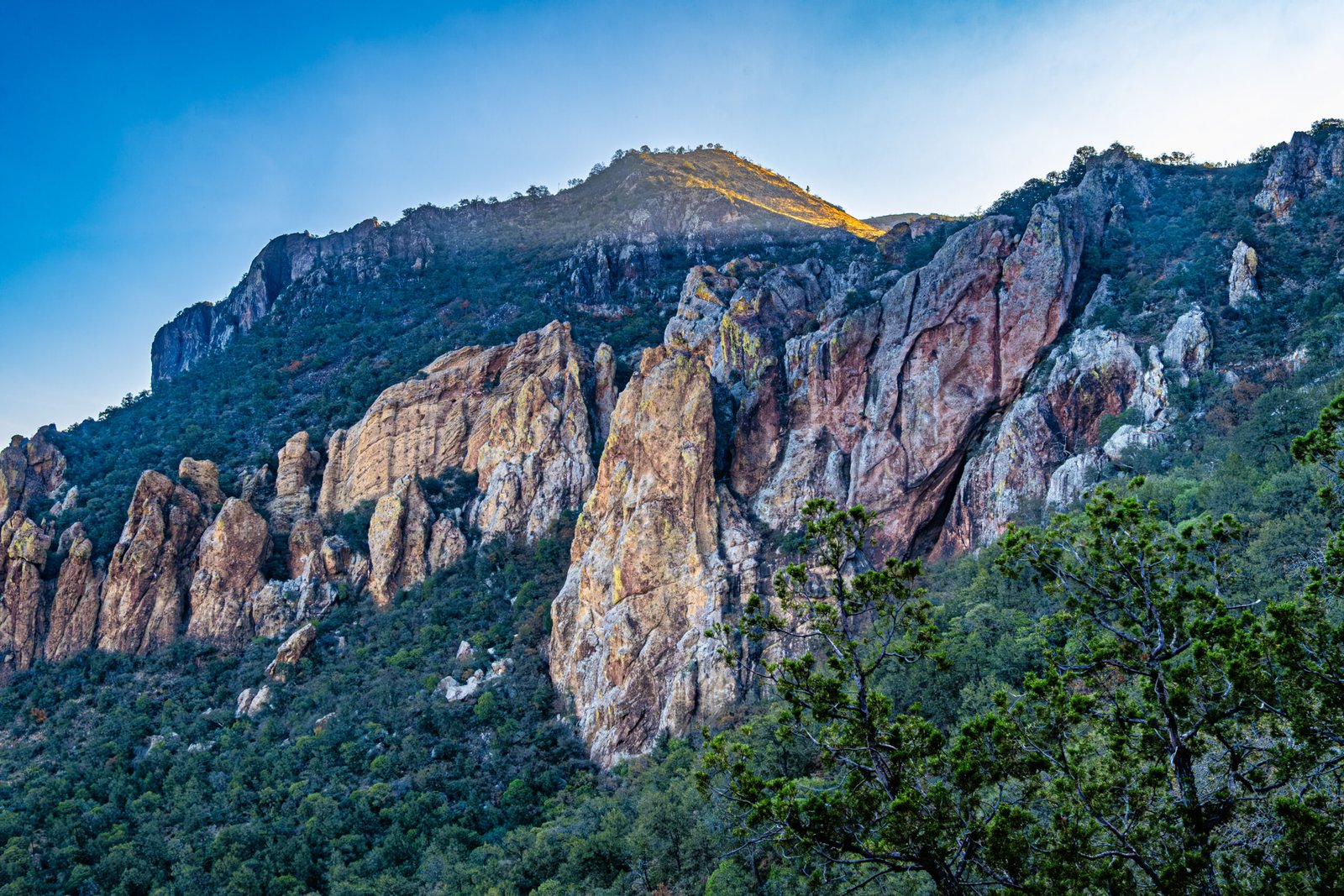
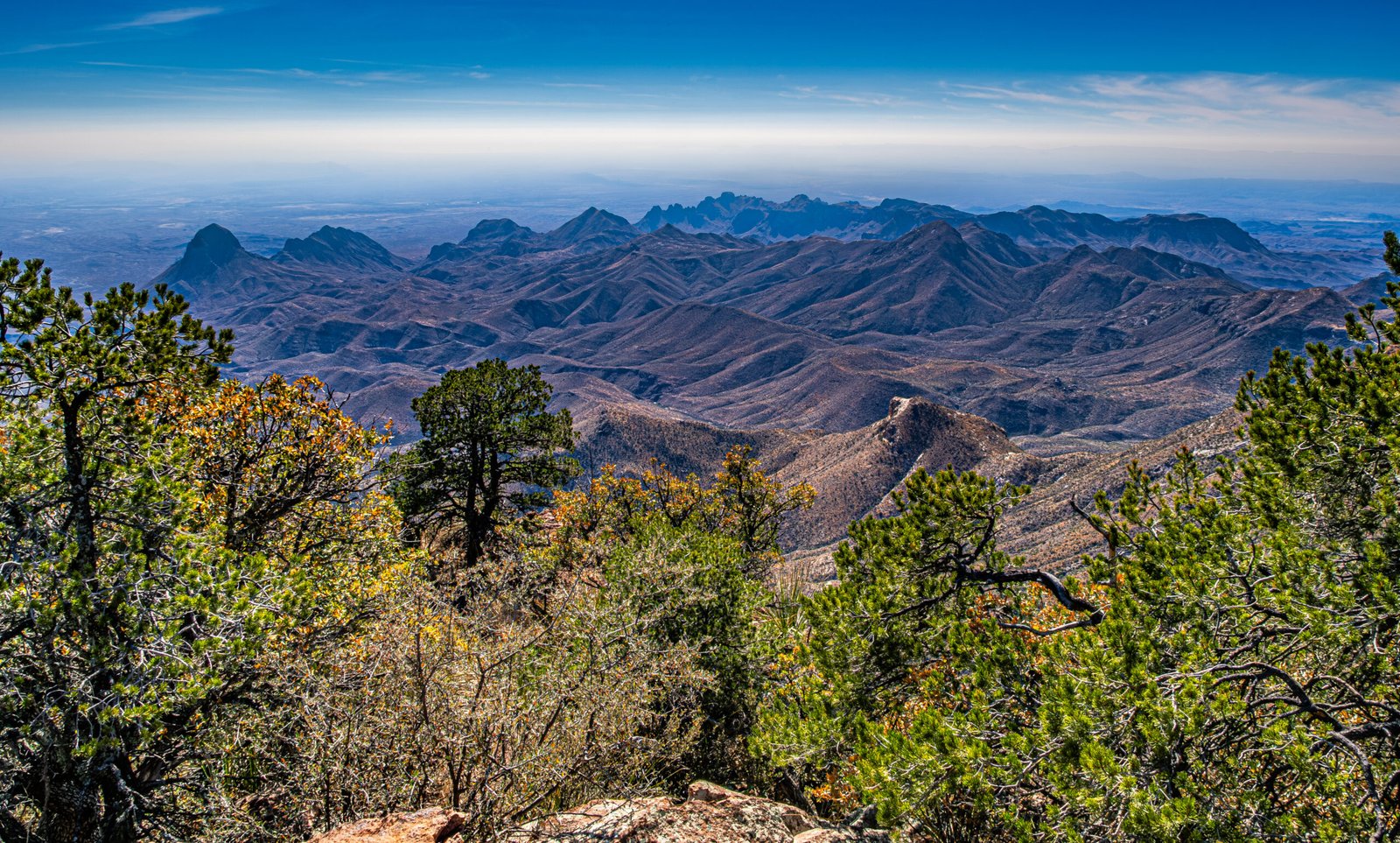
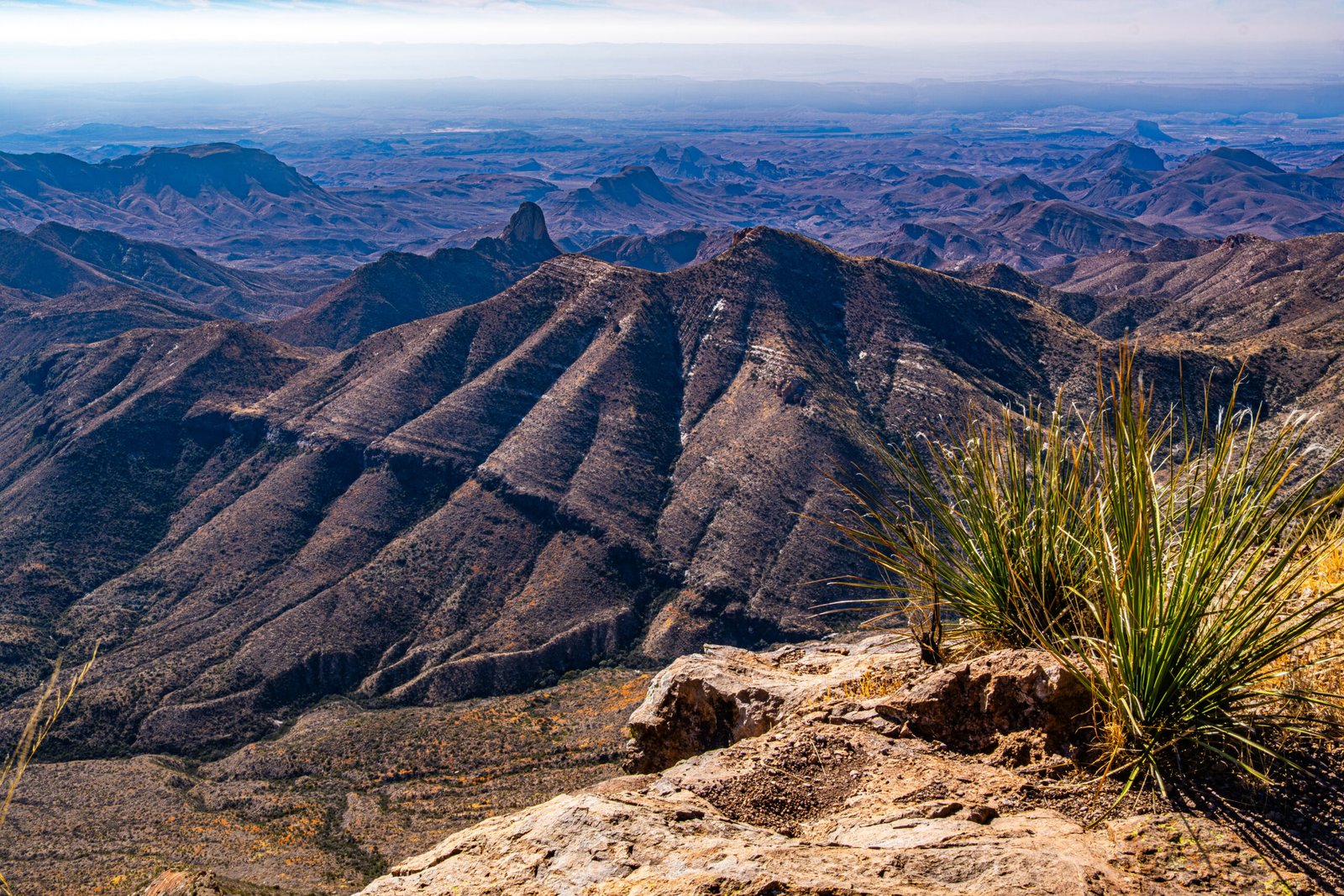
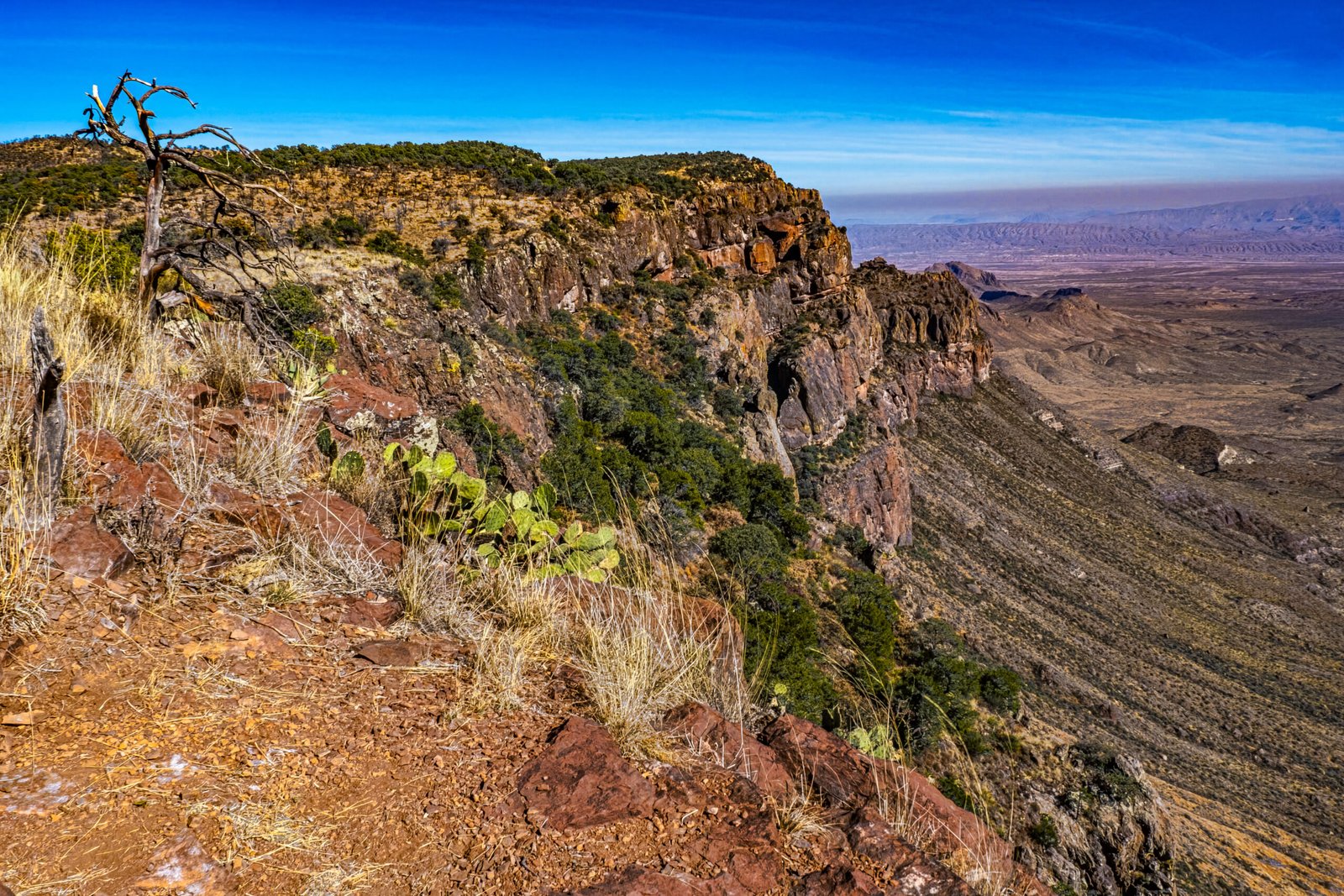
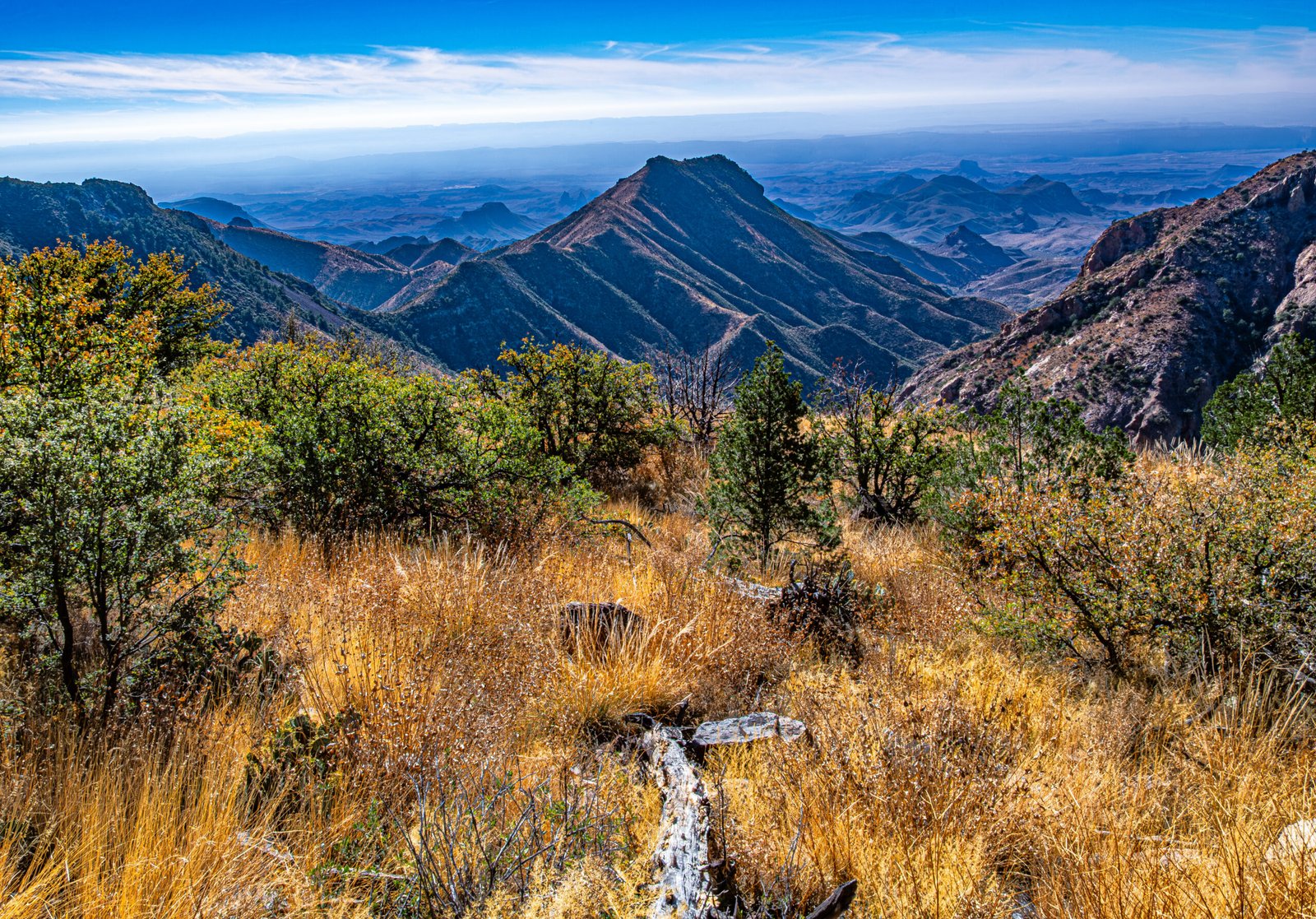
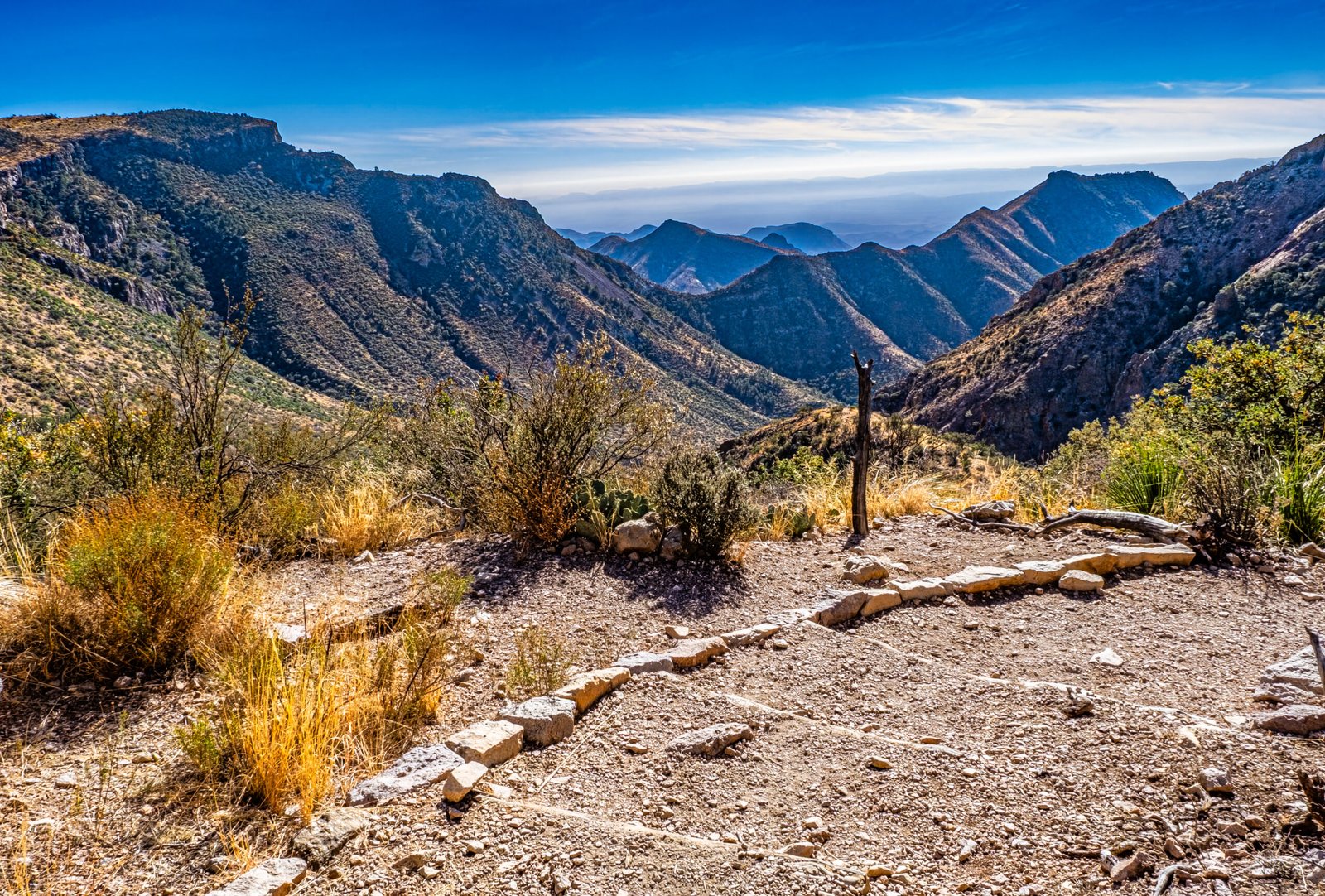
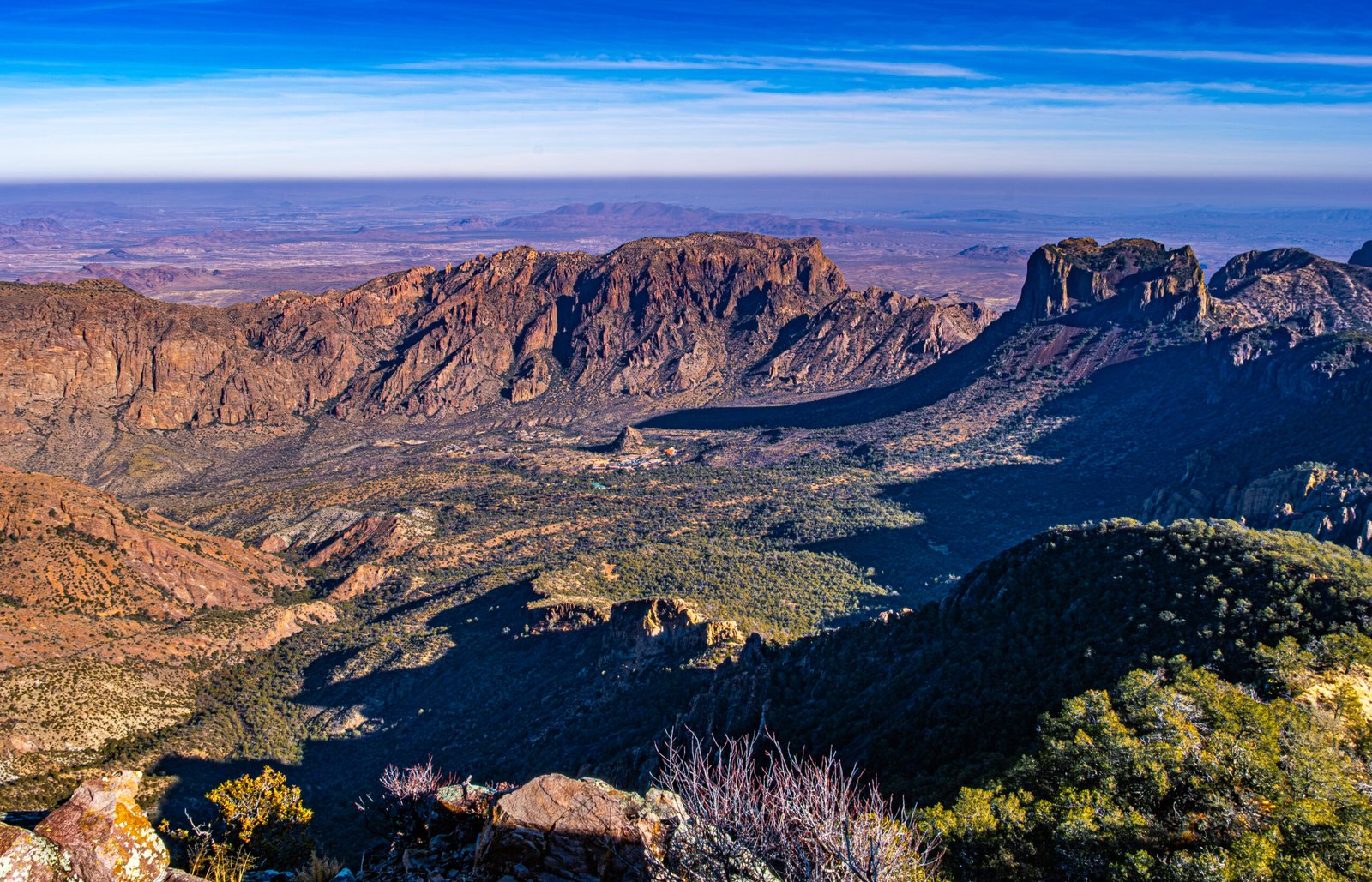
Along with the Grand Canyon rim-to-rim hike and the Chesler Park and Druid Arch combo in Canyonlands, this hike is one of the best desert topography day hikes in the United States. To be fair, Emory Peak and the South Rim are each great hikes in their own right, but can be easily combined into an epic and challenging day. In addition to the South Rim, we added the less visited East Rim, giving us a full tour of the best sites in the Chisos Mountains.
We started early, and watched sunrise over the Chisos Basin on the gradual ascent to Emory Peak. This is the section with most of the elevation gain on this hike. It is not especially steep, but there is a relatively steady uphill for 5 miles. On the final pitch to the summit, there is a short scramble with minor exposure, but overall Emory Peak is relatively easy and accessible in the spectrum of summit hikes. The view from the peak over the Chisos Basin, Toll Mountain and toward the South Rim is both airy and beautiful.
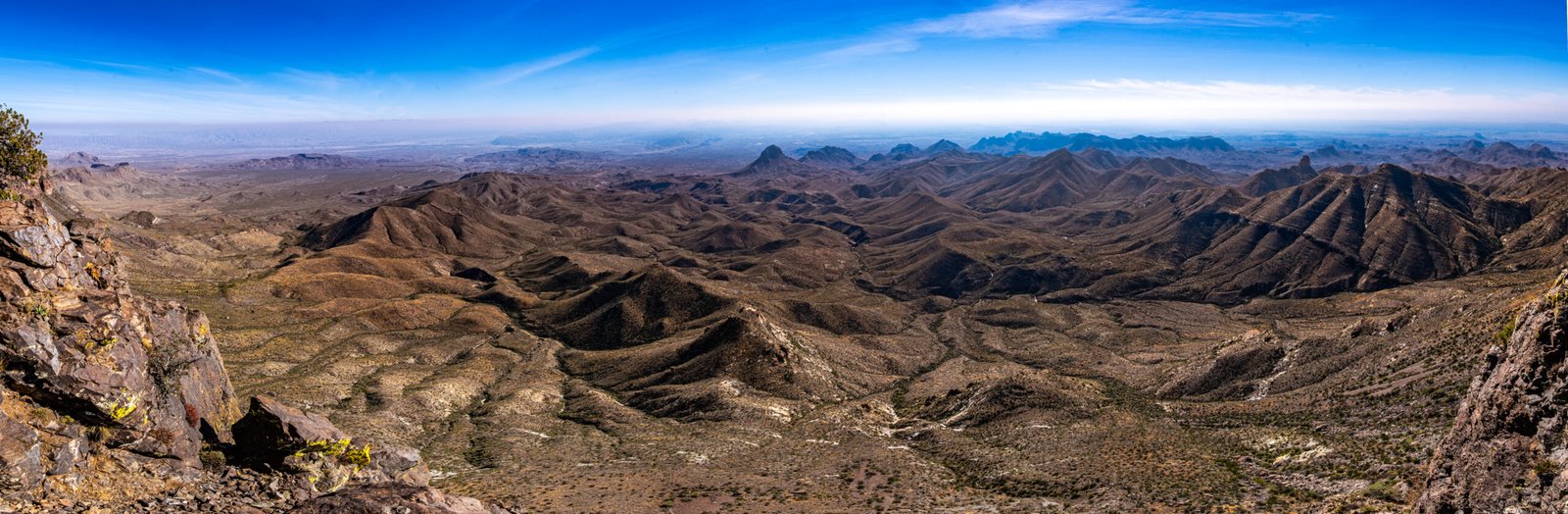
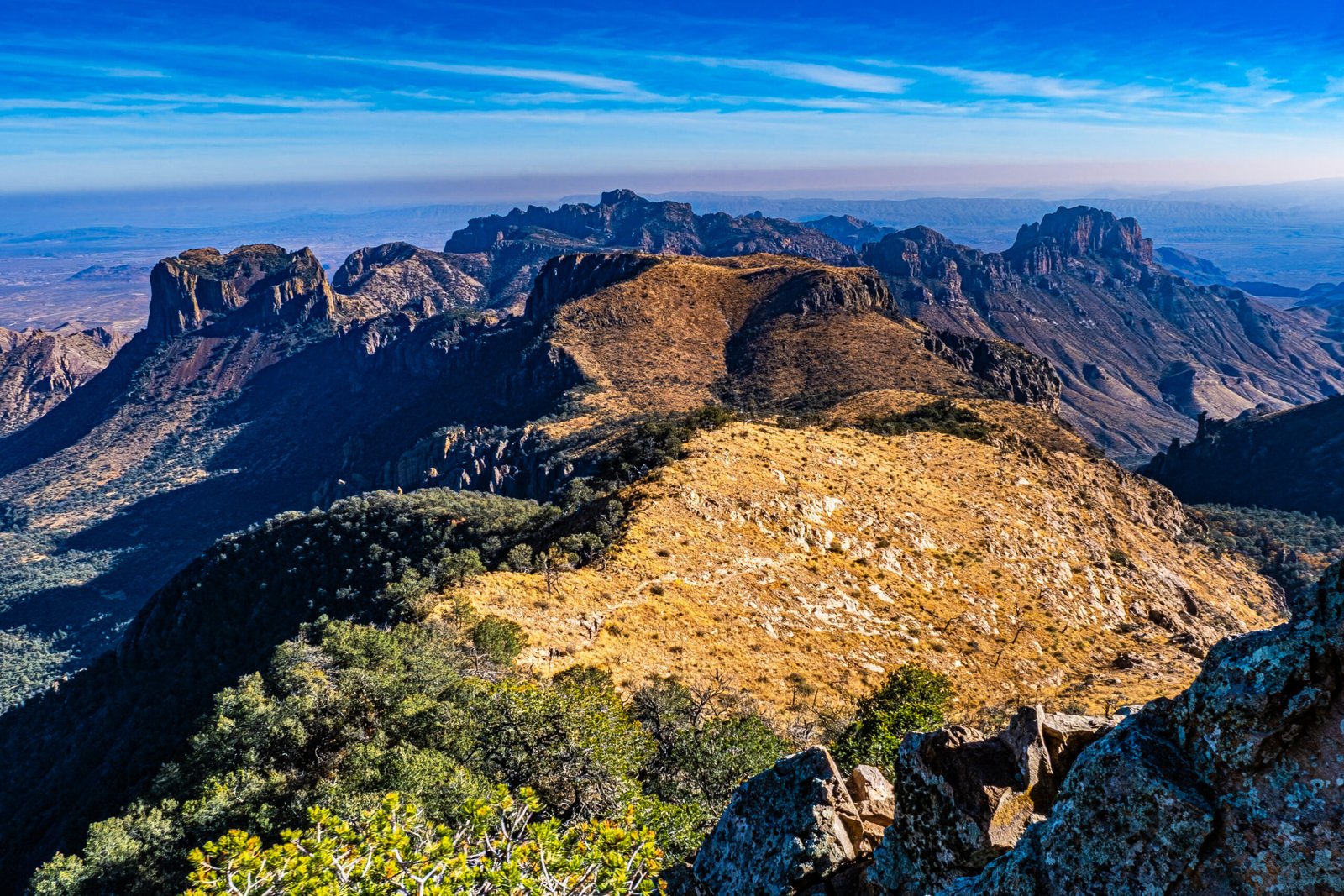
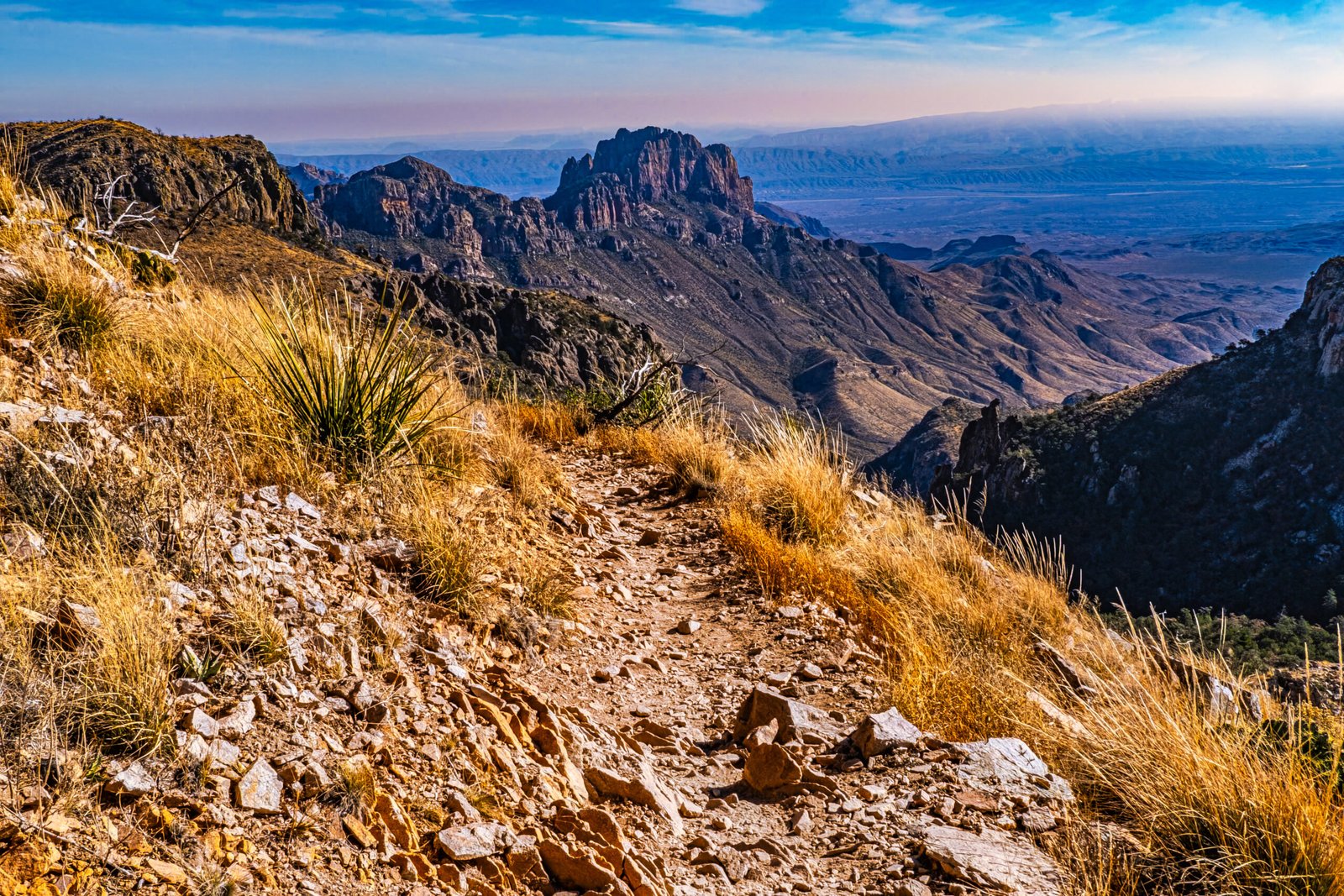
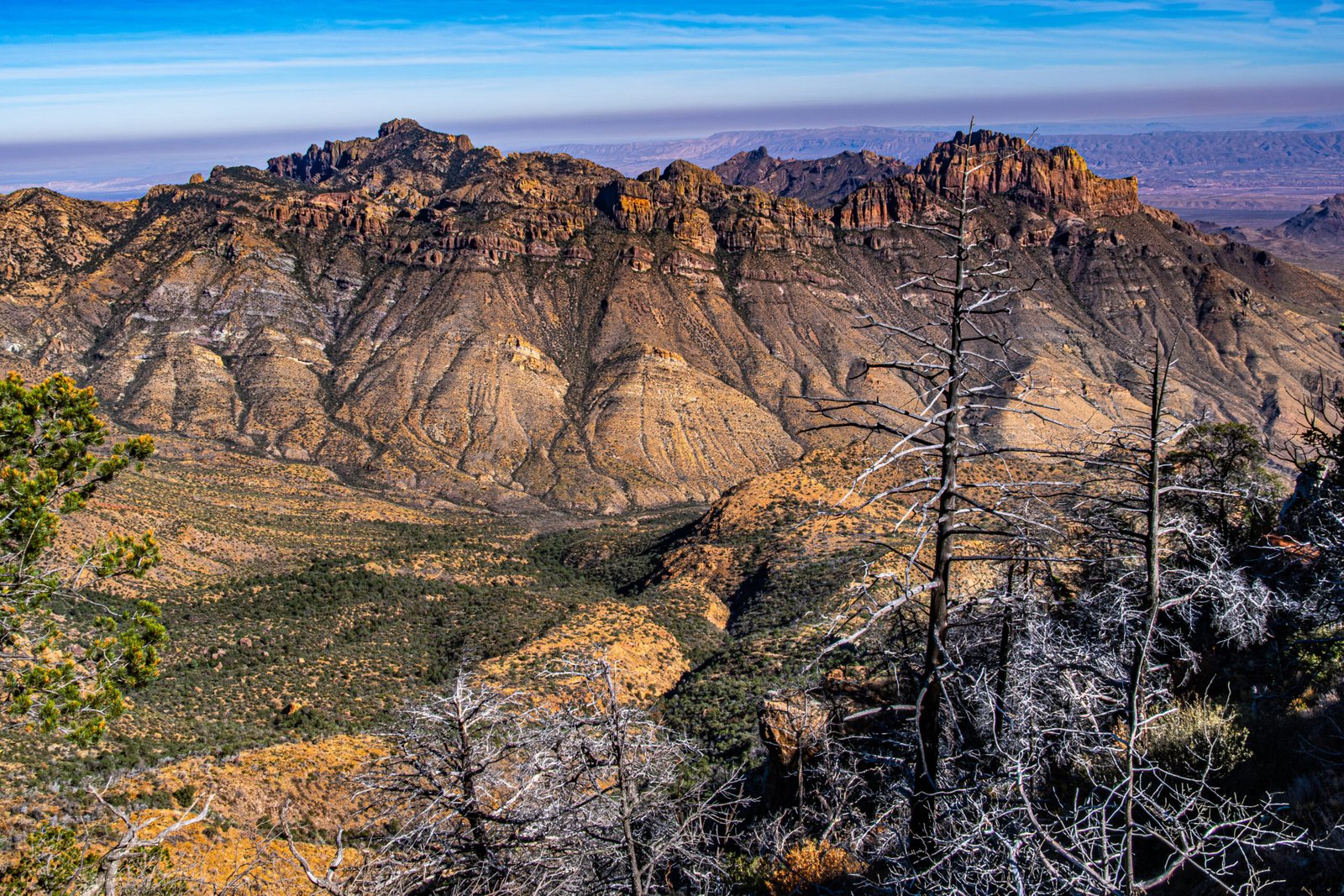
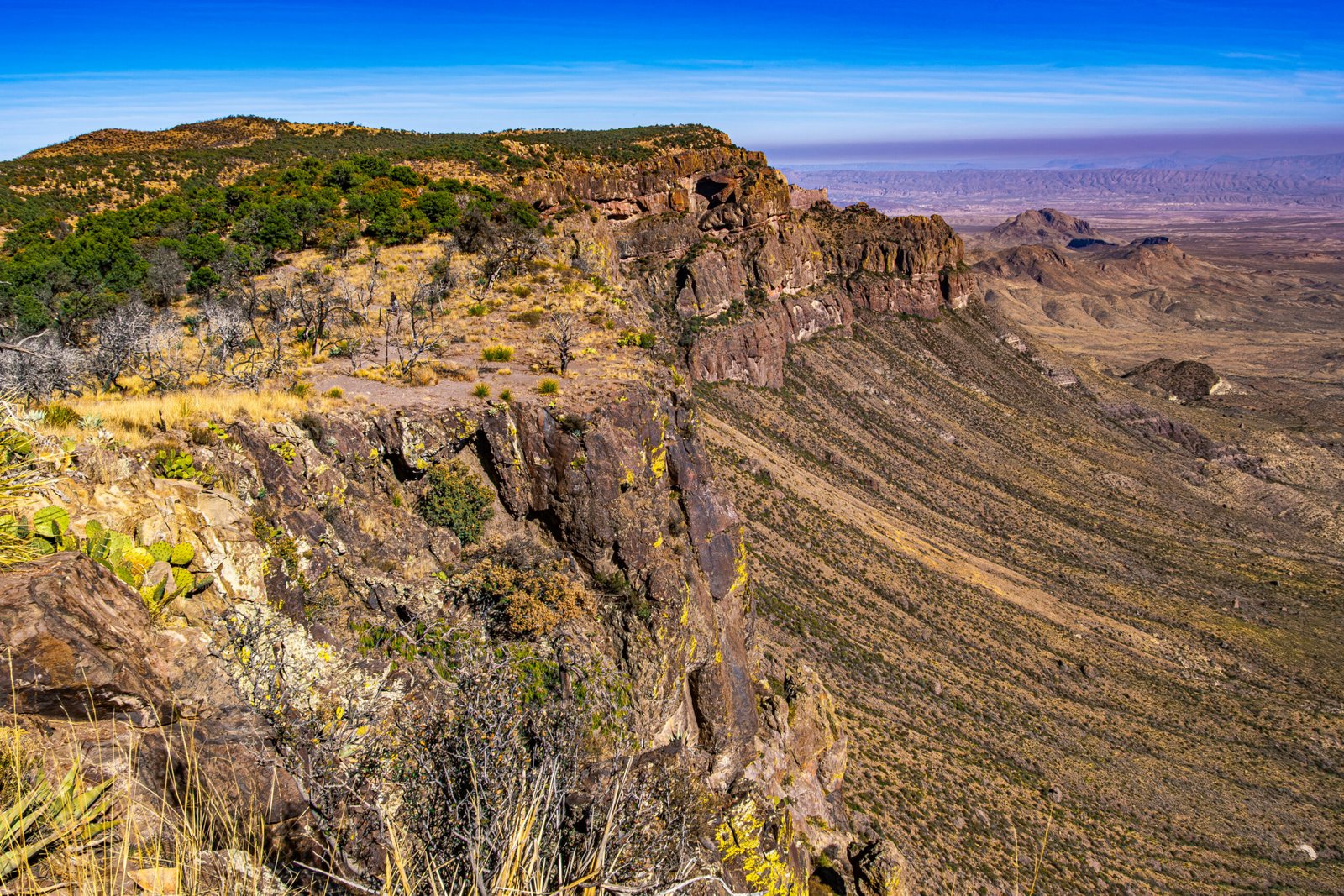
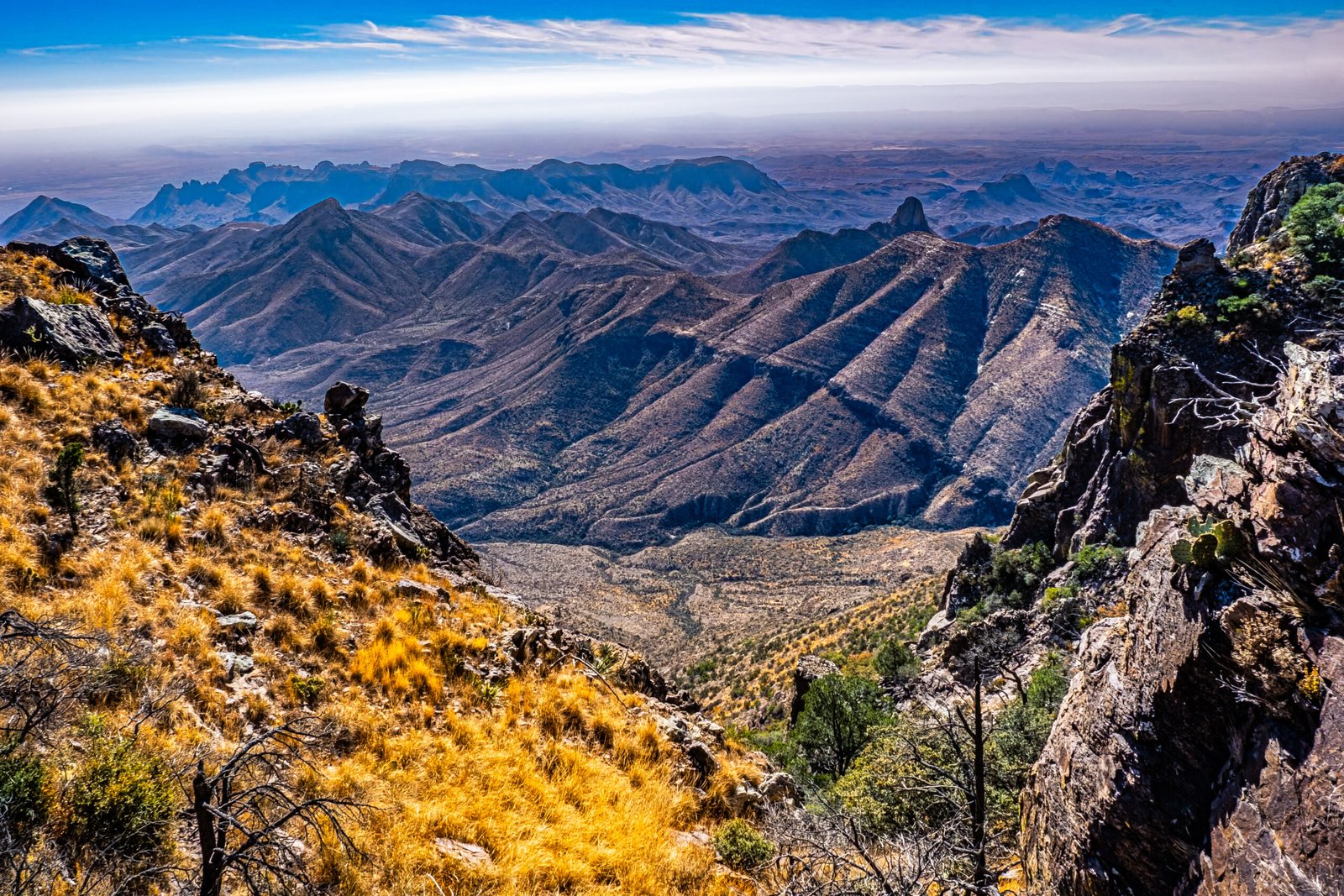
After a short break on the summit of Emory, we continued toward the East Rim. We did this portion of the hike in the late morning on a sunny day. It was warm and wegot a lot of sun exposure, even in late December. At 9.5 miles, we reached the East Rim. This is the most underrated part of this hike in my opinion. We only encountered one small group who were camping at one of the East Rim sites, but otherwise had the area to ourselves. The views to northeast of Crown Mountain are spectacular. As we made our way around to the South Rim, we enjoyed two miles of unobstructed views over the basin and range formations at the south edge of the Chisos Mountains and the Chihuahuan Desert. My favorite photos from the hike are from this area.
After the South Rim, we made the long hike back through Laguna Meadow to the trailhead, creating a loop. In total, the hike was 18.2 miles and 3660 ft of vertical. It was a challenging day, but not as hard as those numbers would suggest. I only recommend doing this hike in the Winter, as the heat and exposure could be life threatening in the late Spring, Summer or early Fall.